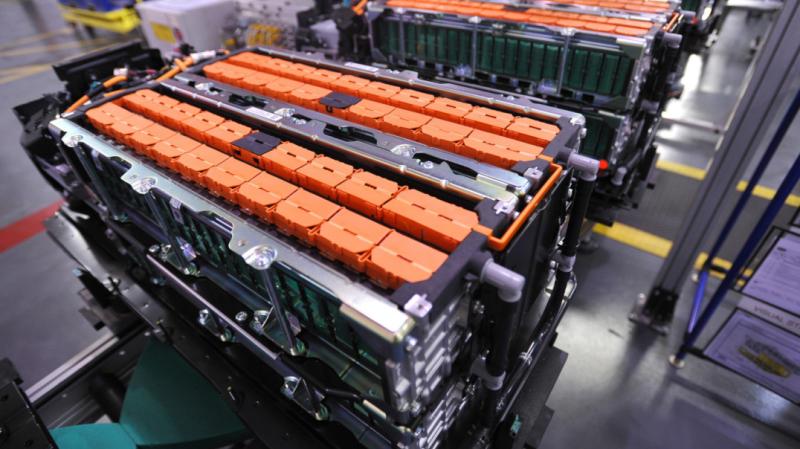
Charging lithium-ion batteries
Get ready for work—you must wear:
- work shoes with composite toe caps,
- protective gloves,
- safety glasses.

Before you start work, you must:
- Complete health and safety training and on-the-job training.
- Have no health contraindications to performing the work.
- Be familiar with the operating instructions for the machines and equipment used at your workplace.
Before starting work:
- Make sure you are not wearing any metal jewelry that could pose a hazard when in contact with live parts.
- Check the technical condition of the device and battery.

- Follow the operating instructions for the device.
- Connect the charger to the power supply.

- Use a working plug to connect the battery.

During operation:
- Park the trolley close to the charging station.
- Secure the truck and turn off the ignition.
- Then open the covers and disconnect the battery from the truck.

- Place the hand truck with the battery transport box next to the truck.

- Remove the battery from the truck using auxiliary tools, remembering to keep your back straight.

- Keep the charging area tidy and clean.

After finishing work:
- After charging is complete, disconnect the cart from the charger, following the manufacturer's instructions.
- Remove the keys from the trolley.
- Pull the emergency stop handle up.
What NOT to do?
- Allow unauthorized persons to work on the device.
- Repair the device yourself.
- Use open flames in the battery charging area or when working with batteries.
- Place cardboard boxes or other flammable materials on the battery.
- Store flammable materials in the battery charging area.
- Open batteries.
Failure or accident?
- If something breaks down, disconnect the device from the power supply, secure it against restarting, and report the fault to your supervisor.
- If an accident has occurred, do not move anything and inform your supervisor.
- Hang a sign on the damaged device: "DEVICE UNDER REPAIR – DO NOT TURN ON."
- In the event of an electrolyte leak, use sorbent (UNI SAFE) or another agent, such as sand.

Scan the QRcode
To view full content
Worth knowing more