Particularly hazardous work
Before you start work, remember that you must:
- Complete health and safety training and on-the-job training.
- Have additional qualifications, if required (e.g., welder, electrician).
- Have no health contraindications to performing the work.
- Be familiar with the operating instructions for the machines and equipment used at your workplace.
During work, the following must be ensured:
- direct supervision by a designated person,
- appropriate technical safeguards,
- on-the-job training specifying:
- who does what,
- in what order,
- what health and safety rules apply.
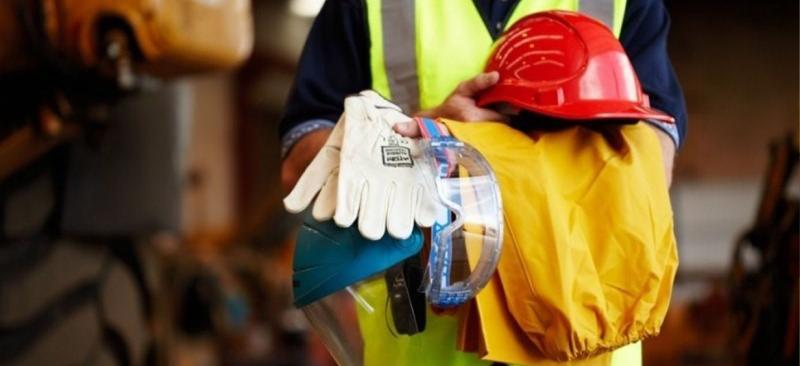
LIST OF NECESSARY EQUIPMENT
BODY PROTECTION:
- Work clothing (cotton, flame-retardant, or antistatic, depending on the type of work)
- Protective coveralls (for welding or working with technical gases)
- High-visibility vest (with reflective elements, for work in traffic)
FOOT PROTECTION:
- Safety footwear with:
- composite or steel toe cap (protects toes from impact),
- non-slip and puncture-resistant sole,
- antistatic properties (for work with electricity or gases).
HAND PROTECTION:
- Work gloves suited to the type of work:
- leather or welding gloves – for welding, cutting,
- rubber or nitrile – for contact with oils, gases, coolants,
- electrical insulation – for electrical work,
- cut-resistant – for mechanical work.
RESPIRATORY PROTECTION:
- Filtering mask or half mask (FFP2/FFP3) – for dust, welding fumes, gases, or vapors.
- Breathing apparatus – in enclosed spaces or in the presence of high concentrations of hazardous substances.
EYE AND FACE PROTECTION:
- Safety goggles or welding helmet – for welding, cutting, grinding, working with chemicals.
- Face shield – for protection against splashes or spatters.
HEAD PROTECTION:
- Safety helmet/hard hat – mandatory when working at heights, on construction sites, near machinery or suspended loads.
- Safety cap – in confined spaces (e.g., workshops, warehouses).
HEARING PROTECTION:
- Ear muffs or earplugs – when working in noise levels above 80 dB.
FALL PROTECTION:
- Safety harness with safety rope and shock absorber
- Anchor point / safety rope
- Helmet with chin strap
IF YOU ARE AN EMPLOYEE (CONTRACTOR):
- Make sure that you have no medical contraindications and that you have up-to-date health and safety training and the required qualifications.
- Put on work clothes and personal protective equipment: safety shoes, gloves, goggles, helmet, hearing protection.
- Do not wear dirty clothing, clothing soaked in oil, or clothing made of synthetic fibers (risk of ignition and electrostatic discharge).
- Work according to the instructions of the leader or coordinator, exercising caution and maintaining order in the workplace.
- Report any malfunctions, leaks, damage, or dangerous situations immediately.
- In case of an accident, administer first aid and call for medical assistance.
AFTER FINISHING WORK, REMEMBER:
- Close and secure gas cylinders in an upright position.
- Dispose of damaged or empty tanks in accordance with the rules.
- Clean up the work area – do not leave any hazards for other users.
WHAT NOT TO DO:
- Use open flames or smoke tobacco.
- Transport technical gases in an unsafe manner.
- Touch oil-contaminated parts with your bare hands.
- Wash your hands or equipment with solvents.
- Repair or maintain equipment while it is in operation.
- Inhale vapors and exhaust fumes from fuels, gases, and oils.
IF YOU ARE A LEADER:
- Check the qualifications and medical examinations of employees before allowing them to work.
- Conduct on-the-job training, discuss task distribution, sequence of operations, and safety rules.
- Provide direct supervision during particularly dangerous work.
- Ensure that:
- the workplace is prepared (remove flammable materials, disconnect power, secure the area),
- protective equipment is in good working order and certified,
- the work is performed without haste, with breaks (especially for forced work or work at height).
- After completing the work, check that the equipment is tidy and secure.
IF YOU ARE A COORDINATOR:
- Define the type of work and the persons responsible.
- Approve personal protective equipment, technical safety measures, communication methods, and emergency procedures.
- Ensure that the workplace is properly prepared and secured.
- In the case of fire-hazardous work, provide fire-fighting equipment and escape routes.
- Ensure that each job has the appropriate permit (OBHP_1).
- Supervise the work and respond in the event of a failure or hazard.
WORK AT HEIGHT / ON ROOFS
- Ensure that you have up-to-date medical examinations and training for working at heights.
- Check that weather conditions (wind, rain) allow for safe work.
- Put on a helmet, harness, and attach a safety line — use them at all times while working.
- Always work with a spotter.
- Anchor yourself only in designated areas or do not cross the safety zone boundary (min. ... m from the edge).
- Secure the area below against falling objects.
- Make sure that tools are secured against falling.
- Cover all openings and recesses.
- Keep your workplace tidy.
WORK ON SCAFFOLDING
- Check that you have up-to-date medical examinations and training for working at height.
- Wear a helmet and make sure that the scaffolding has been technically inspected.
- Only work in suitable weather conditions (no strong wind).
- Make sure the scaffolding has handrails (0.6 and 1.1 m) and toe boards.
- The scaffolding should stand on stable ground and be secured against movement.
- Do not lean outside the structure — maximum arm's length.
- Do not overload the scaffolding and secure tools against falling.
- Fence off the work area and mark it with warning tape.
- Keep the work area tidy and organized.
WORKING ON A LADDER (ABOVE 3 m)
- Check the ladder before use — it must be clean, dry, and stable.
- Always work with another person to secure you.
- Wear a helmet and make sure the ladder is standing on a level, firm surface.
- Use the three-point support rule (two legs + one hand or vice versa).
- Do not lean beyond the outline of the ladder and do not carry loads heavier than 10 kg.
- Do not climb higher than 4 m without additional safety measures.
- Secure tools against falling.
- Keep your workplace tidy.
WORKING ON A BASKET LIFT
- Check that you have valid medical examinations, training, and qualifications.
- Wear a helmet, harness, and safety line.
- Make sure that the lift has a valid UDT inspection and technical inspection.
- Check the surrounding area – it should be fenced off and marked.
- Do not lean outside the basket and do not overload the platform.
- Do not work near high-voltage lines or obstacles.
- Secure tools against falling.
- Keep your workplace tidy.
WORK IN CONFINED SPACES
- Only work with a spotter – agree on a method of communication in advance.
- Use personal protective equipment: filter masks, protective clothing, harnesses, and safety ropes.
- Before starting work, calibrate the gas detector and check the atmosphere in the space.
- Make sure that the equipment is disconnected from the power supply and secured against start-up.
- Remove all hazardous substances from the space.
- Ensure that the temperature does not differ from the outside temperature by more than 5°C.
- Ensure ventilation and air exchange.
- Use only equipment powered by a safe 24 V voltage.
- Take breaks and switch with others approximately every 30 minutes.
- Keep things tidy and organized.
WORKING WITH HAZARDOUS SUBSTANCES
- Read the material safety data sheet and use the required protective equipment (gloves, mask, goggles).
- Make sure that the substances are in their original, labeled containers.
- Work only with the amount needed for the day.
- Ventilate the room before starting work.
- Do not mix substances unless required by the process.
- Know where the nearest eye wash station and first aid kit are located.
- Remove any products that could become contaminated from the area.
- Do not work with substances for more than 4 hours without a break.
- Keep your workplace tidy.
WORKING WITH ELECTRICAL EQUIPMENT
- Only work if you have valid SEP certification and a current medical examination.
- Work with the assistance of a second person.
- Use only dielectric equipment: poles, mats, insulated tools.
- Disconnect devices from the power supply and secure them against accidental activation.
- Do not wear jewelry or metal items.
- Be careful – work with dry hands and dry shoes.
- Keep your workplace tidy.
FAILURE OR ACCIDENT:
- If something breaks down, notify your supervisor immediately.
- If an accident has occurred, do not move anything and also inform your supervisor.


Scan the QRcode
To view full content
Worth knowing more