Repairing pallets using hand tools
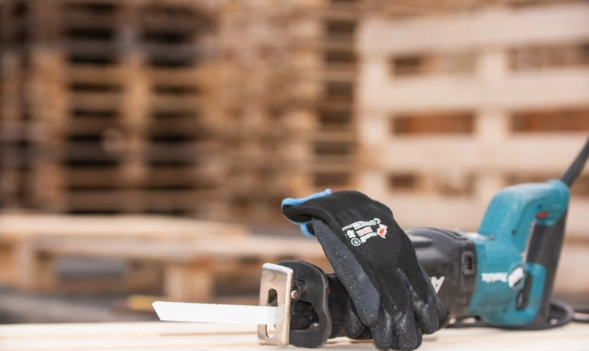
Get ready for work—you must wear:
- a work shirt and pants,
- work shoes with composite toe caps and puncture-resistant soles,
- work gloves,
- a reflective vest,
- safety glasses.

Before you start work, remember that in order to proceed with repairs, you must:
- Complete health and safety training and on-the-job training.
- Have no health contraindications to performing the work.
WHEN DOES A PALLET NEED REPAIR?
- A board is missing from the top, runners, or one of the blocks (supports).
- Cracks in individual slats.
- Loose or chipped boards.
- Improperly stored pallets (too much moisture) are also at risk of rotting.
- The wood is too dark in color, which indicates that the pallet wood is brittle and fragile.
Consequences of using pallets in poor technical condition
- Destruction or damage to goods transported on pallets.
- Creation of a hazard for people working with these carriers.
- Contamination of the warehouse (wood waste, chips, sawdust).
- Increased risk of damage to machinery and equipment (troublesome and costly downtime).
Before starting repairs:
- Use work gloves that ensure a secure grip on hand tools.
- Prepare the necessary aids, instruments, and work tools.
- Check the condition of tools and equipment, and do not use damaged or blunt ones.
- Remove all unnecessary items from the workplace.
- Ensure that the workplace is well lit so that you can perform the work without straining your eyes.
- Make sure that starting work will not endanger other people in your environment.
During work:
- Sort the pallets and assess the extent of the damage.
- Recover as much material as possible from severely damaged pallets for reuse.
- Repair pallets with minor damage so that they meet their specifications.
- Remove nails, screws, and damaged wooden elements, replace them with new parts, and connect them to the entire pallet.
- Stay focused on the tasks you are performing.
- Do not point the blade towards yourself or others.
- Do not place any part of your body in the cutting or impact area.
After finishing work:
- Clean the device, tidy up the work area, and put the equipment and accessories back in their designated place.
- Make sure that the tools left behind do not pose a threat to the environment.
What should NOT be done?
- Allow unauthorized persons to work.
- Touch sharp parts of the tool with unprotected parts of the body.
- Use tools for purposes other than those for which they are intended.
- Perform work with faulty tools.
- Use equipment contrary to its intended purpose.
Malfunction or accident?
- If something breaks, stop using the tool and report the fault to your supervisor.
- If an accident has occurred, do not move anything and inform your supervisor.
- In the event of an accident, provide first aid to the injured person and call emergency services if necessary.


Scan the QRcode:
And you will get access to the full content
Worth knowing more