Working with knives and sharp tools
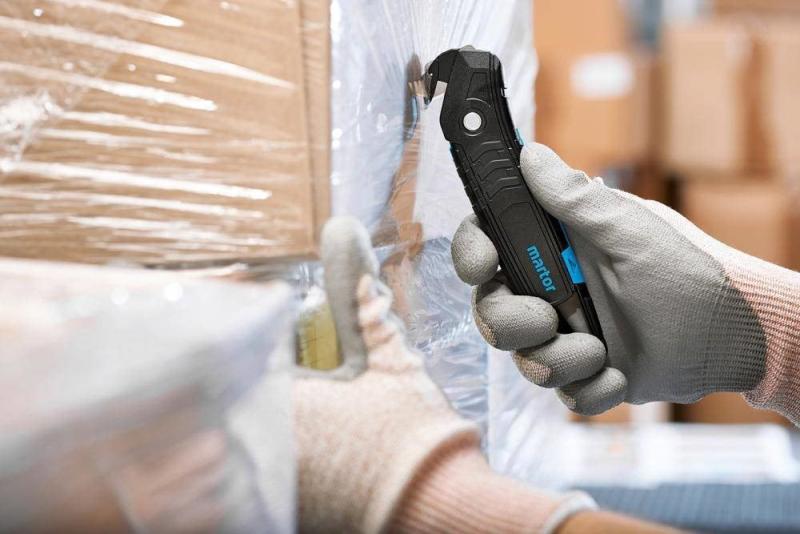
Get ready for work—you must wear:
- a work shirt and pants,
- work shoes with composite toe caps,
- cut-resistant work gloves.

Before you start work, remember that in order to work with sharp tools, you must:
- Complete health and safety training and on-the-job training,
- Have no health contraindications to performing the work.
- Be familiar with the operating instructions for the machines and equipment used at your workplace.

Before starting work:
- Use the right tool for the job.
- Check the blade for damage, corrosion, and ease of extension.
- Make sure the blade is not blunt.
- Extend only one blade at a time to minimize the risk of breakage during cutting.
- Ensure that gloves are in good condition and fit well.
- Make sure that no parts of your body or clothing are close to the blade.
- Keep a safe distance (1–2 arm lengths) from other people.
While working:
- Follow the instructions given by the person providing the training.
- Keep tools in good working order and cutting elements in good condition (clean, sharp, oil-free).
- Use tools only for their intended purpose.
- Always wear cut-resistant gloves when working with a knife.
- Ensure good lighting in the workplace.
- Adapt your working technique to the type of material (foil, cardboard, plastic).
- Use a cutting force appropriate for the thickness of the material.
- Always retract the knife blade after finishing work.
- Do not take your eyes off the knife while using it.
- Regularly remove unnecessary materials to maintain adequate working space.
- Always cut away from your body, keeping in mind the "cut triangle."
- Keep a safe distance from other people and do not allow them to enter your "danger zone."

After finishing work:
- Secure the blade and store it inside the housing.
- Clean up your work area and put the equipment back in its designated place.
- Make sure that the storage location is visible and safe (no risk of falling or being knocked over).
- Clean the device according to the manufacturer's instructions.
- Check that the device left behind does not pose a threat to the environment.
What should you not do?
- Allow unauthorized persons to work.
- Use tools when wet or in the rain.
- Repair or modify tools yourself (e.g., cover tools with adhesive tape).
- Use faulty tools.
- Hold a hand tool by any part other than the handle.
- Work on unstable surfaces.
- Clean tools with gasoline or other flammable liquids.
- Point the tool toward yourself or other people.
- Extend the snap-off blade more than one segment.
- Cut toward yourself or others.
- Throw knives or other sharp tools, or catch a falling knife.
- Put your hands or other body parts in the area of cutting or piercing elements.
- Leave the knife with the blade exposed unattended.
Malfunction or accident?
- If something breaks, put the damaged tool away and report the malfunction to your supervisor.
- If an accident has occurred, do not move anything and inform your supervisor.
- Hang a sign on the damaged tool saying: "DEVICE DAMAGED - DO NOT USE."
- In the event of an accident, provide first aid to the injured person and call emergency services if necessary.

Scan the QRcode:
And you will get access to the full content
Worth knowing more