Compressor
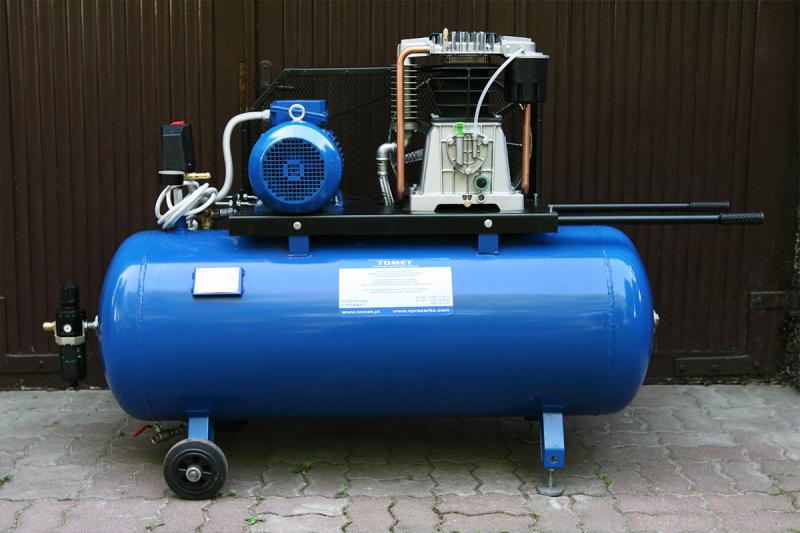
Get ready for work—you must wear:
- a work shirt and pants,
- work shoes with composite toe caps,
- a reflective vest,
- cut-resistant work gloves,
- safety glasses,
- hearing protection,
- helmet,
- dust mask.

Before you start work, you must:
- Complete health and safety training and on-the-job training,
- Have no health contraindications to performing the work.
- Be familiar with the operating instructions for the machines and equipment used at your workplace.
Before starting work:
- Check the technical condition of the equipment, cables, hoses, and tank.
- Make sure there are no leaks or damage.
- Remove flammable materials from the surrounding area.
- Check the oil level and cleanliness of the ventilation grilles.
- Before maintenance, disconnect the power supply and empty the tank.
During operation:
- Follow the manufacturer's instructions.
- Do not touch hot parts, do not transport the device under pressure.
- Do not direct air at people or animals.
- Do not use the compressor in the rain, near fire, at temperatures below 0°C, or in explosive atmospheres.
- Ensure free air flow and cleanliness of the workplace.
- Disconnect the device from the power supply when replacing tools, performing adjustment and maintenance work.
After finishing work:
- Drain the air from the tank.
- Turn off the compressor and clean it.
- Tidy up the workstation and make sure that the device does not pose a hazard.
What should NOT be done?
- Allow unauthorized persons to operate the device
- Repair or clean plastic parts of the compressor yourself with gasoline or solvents
- Exceed the permissible pressure in the tank
- Perform repairs while the device is in operation
- Use the compressor near fire or in an explosive atmosphere
- Leaving your workstation while the compressor is running.
Failure or accident?
- If something breaks down, turn off the device, secure it against restarting, and report the fault to your supervisor.
- If an accident has occurred, do not touch anything and inform your supervisor.
- In the event of an accident, immediately administer first aid to the injured person and call the emergency services if necessary.
- Hang a sign on the damaged device: "DEVICE UNDER REPAIR – DO NOT USE."


Scan the QRcode
To view full content
Worth knowing more